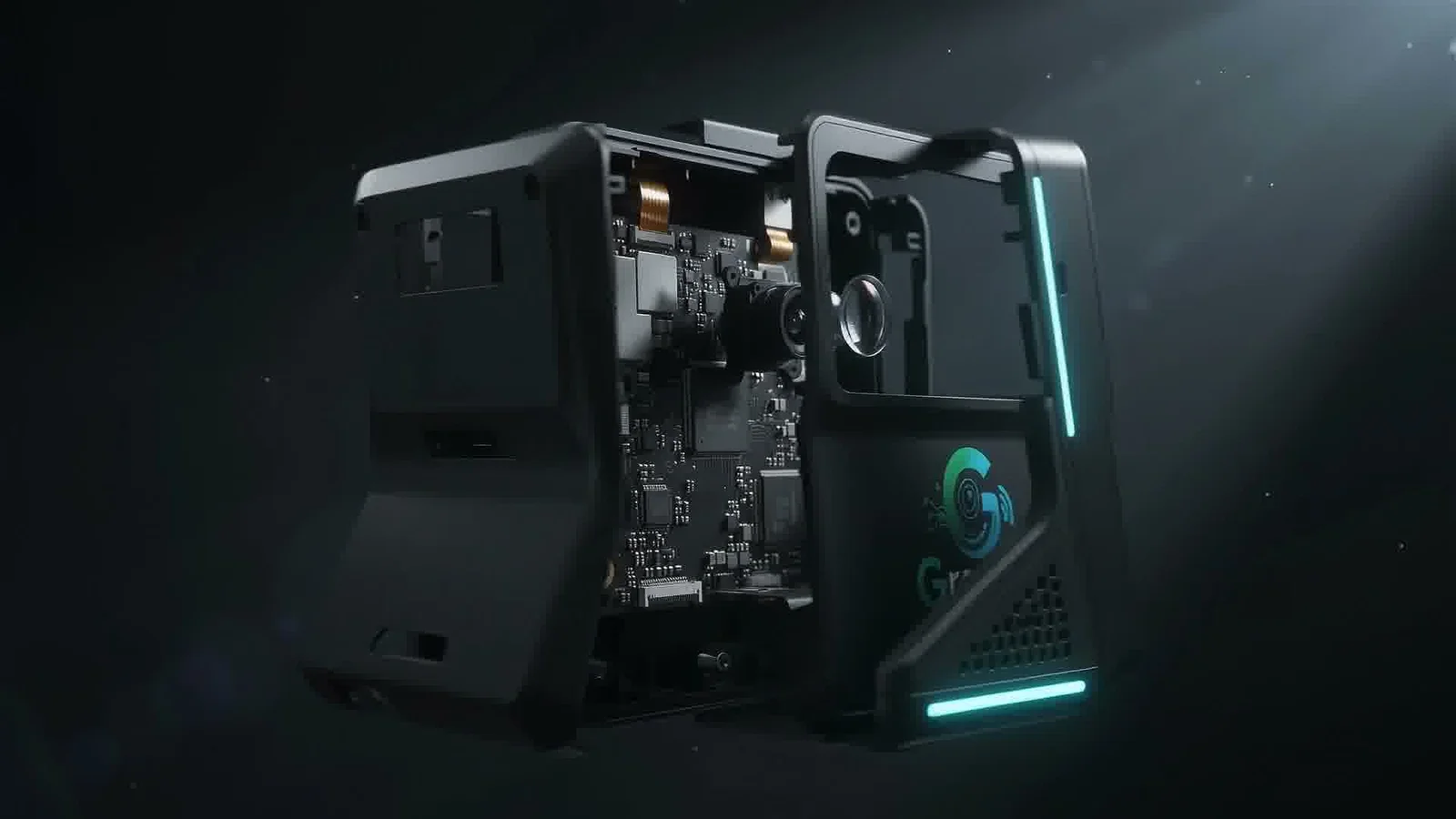
REPOSITORY CONCEPT ARTWORK · NOT A PHOTOGRAPH OF THE BUILT HARDWARETHE SYSTEM CONTEXT
Recognition is only the beginning.
An attendance system has to connect what happens at a physical device with what an administrator can actually see.
Greetly brings those two sides together: a Raspberry Pi handles camera input and face recognition; Supabase stores attendance records; a Next.js dashboard presents updates and device telemetry.
The public repository supplies the implementation evidence for this case study. It is a project walkthrough, not an independently validated deployment or performance benchmark.
From a face to a record.
Six steps. One connected system. Try me — scroll or choose a stage.Try me — tap a stage to follow the event.
01 / OPTICS02 / SENSOR03 / COMPUTE04 / ENCLOSURE
AT THE EDGE
Local intelligence.
Frames stay local. Only the recognition event moves onward.
attendance_logs
student
Recognized identity
timestamp
Capture time
status
Awaiting event
ILLUSTRATIVE RECORD
INTERACTIVE SCHEMATIC · NOT A HARDWARE REPLICA
01/06
Camera input
The Pi reads camera frames locally. The frame stays at the edge for the recognition step.
ARCHITECTURE WALKTHROUGH NOT A LIVE DATA FEED
Read the complete architecture
Capture · Camera input
The Pi reads camera frames locally. The frame stays at the edge for the recognition step.
Process · Raspberry Pi · OpenCV
OpenCV prepares grayscale face regions on the Raspberry Pi. Local processing avoids sending a continuous video stream to the dashboard.
Identify · LBPH recognition · cooldown
The current Python script matches faces with an LBPH recognizer. A per-person cooldown suppresses repeated attendance writes.
Sync · Supabase client
The edge script sends attendance records through the Supabase client. A local queue in the script supports retrying writes.
Store · PostgreSQL
An attendance record is stored in attendance_logs, connecting the identified student to a timestamp and attendance status.
Visualize · Next.js · Realtime
The dashboard subscribes to database updates through Supabase Realtime, bringing the recorded event into the administrator’s view.
ENGINEERING DECISIONS
The details that keep it connected.
01 / LOCAL PROCESSING
Keep recognition at the edge.
The current Python script uses OpenCV’s LBPH recognizer and grayscale face regions on the Raspberry Pi. The web interface receives records instead of needing a continuous camera feed.
Source distinction: the README mentions face_recognition; the inspected implementation uses OpenCV LBPH.
02 / DUPLICATE EVENTS
One person should not become a hundred records.
The script keeps a per-person timestamp and checks the configured cooldown before another attendance write. Repeat detections can provide local feedback without adding another cloud record.
03 / CONNECTIVITY
Separate recognition from delivery.
A local write queue in the edge code supports retrying attendance submissions. This is evidence of retry handling, not a guarantee of lossless delivery under every failure mode.
04 / OPERATIONS
The device is part of the interface.
Camera state, local display feedback and hardware telemetry belong to the same system. The repository documents a systemd kiosk service so the process can start at boot.
DELIVERY / DOCUMENTED SETUP
From repository to reachable service.
01Local changes
02GitHub
03Vercel build
04Deployment
05Cloudflare DNS
The README documents repository-connected Vercel deployment and Cloudflare DNS for the public domain. Production settings and availability have not been independently audited.
What this project made me think about.
The useful part is the connection between layers.
A camera event touches local compute, identity, duplicate handling, network delivery, database state and interface updates. A polished dashboard cannot compensate for an unreliable path between those layers.
Next questions include evaluating recognition under varying conditions, failure recovery, tighter device permissions and observability. These are engineering questions to investigate, not completed improvements being claimed.